Kolari Vision / Optical Division
We build camera optics.
These are the same optics, for your eyes.
Kolari has spent over a decade making infrared conversions and precision filters used by working photographers and cinematographers. Kolari Shades are built to the same tolerances.
FROM $239.99
Ultra, 99% IR blocking, $339.99 / Easy 60-day returns / Affirm available
100%
UV blocked
99%
IR blocked, Ultra
51
Coating layers
As featured in
Fig. 01 / Spectral transmittance
What actually reaches your eye.
Transmittance is the percentage of light a lens lets through at each wavelength. Below 400 nanometres is ultraviolet. Above 700 is infrared, which carries roughly half the sun's energy and which your eye cannot detect. Most lenses are designed only for the middle.
Swipe the chart across to read the full range.
Curves redrawn from Kolari Vision’s own published transmittance data.
The specification is the product.
Three shapes, two lens tiers, from $239.99. Easy 60-day returns if it does not hold up.
Read the right-hand third of the chart. That is infrared. Budget lenses pass almost all of it, luxury lenses pass about half, and Kolari Ultra passes under one percent.
Fig. 02 / Construction
Fifty one layers, then a frame.
A camera filter is judged on whether it adds anything to the image. These lenses are built the same way: correct the spectrum, add no colour, add no distortion.
Fig. 03 / Geometry
Curved lenses bend detail.
Nearly every sunglass lens is curved injection-moulded plastic. Curvature introduces distortion that gets worse toward the edge of your field of view, which is why cheap sunglasses feel subtly wrong when you turn your head.
Kolari lenses are optically flat and ground to camera-filter tolerance. There is no wedge, no power and no edge distortion to adapt to.
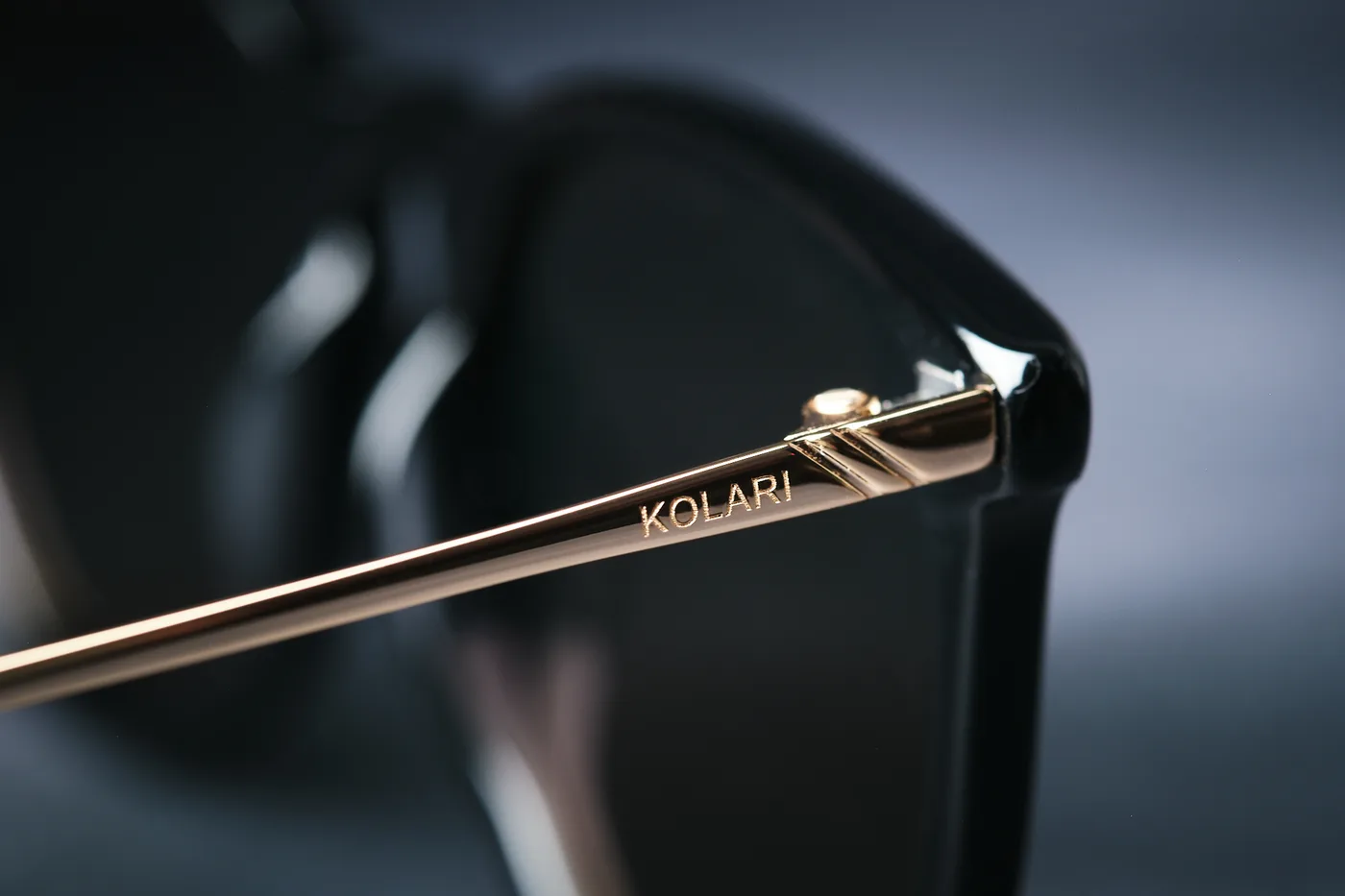
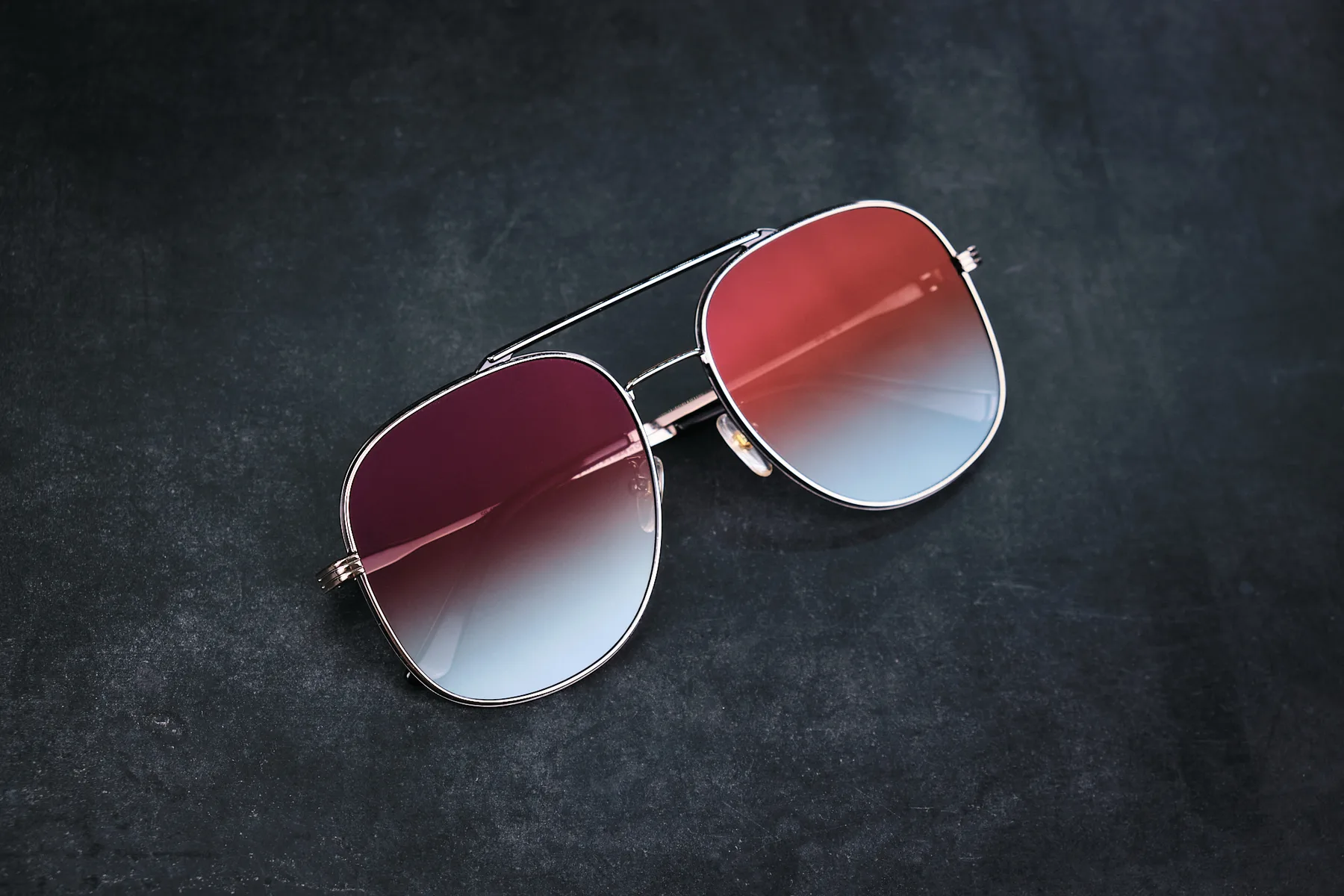
Fig. 04 / Side effect
Infrared blocking has a second use.
Many facial recognition and driver-monitoring systems illuminate the face with infrared and read the reflection. A lens that rejects 99% of infrared substantially interferes with that path.
This is a consequence of the optical design rather than the purpose of it. It is measurable, and some customers care about it a great deal.
Fig. 05 / Comparison
Specified against the category.
Swipe the table across to reach the Kolari columns.
| Budget | Name brand | Luxury | Kolari | Kolari Ultra | |
|---|---|---|---|---|---|
| Substrate | Plastic | Plastic | Plastic | Gorilla Glass | Gorilla Glass |
| Optically flat | No | No | No | Yes | Yes |
| UV block | Varies | ≤100% | ≤100% | ≤100% | ≤100% |
| IR block | None | Minimal | Minimal | 90% | 99% |
| Colour neutral | No | Varies | Varies | Yes | Yes |
| Frame | Plastic | Acetate | Metal | Titanium | Titanium |
| Price | $20 | $180 | $400+ | $239.99 | $339.99 |
Fig. 06 / Provenance
Who signs off on these.
Founded 2013
Ilija Melentijevic began repairing cameras at 16 and founded Kolari Vision at 18. He also holds a PhD from Rutgers.
Working optics
Infrared and full-spectrum conversions, magnetic clip-in filters, circular filters and the Kolari Atlas matte box system.
In the field
Kolari optics are used by professional photographers and cinematographers.
Fig. 07 / Configure
Three frames. Two lens specifications.
The tiers differ on one parameter only: infrared rejection. Substrate, coatings, flatness, frame material and colour neutrality are identical.
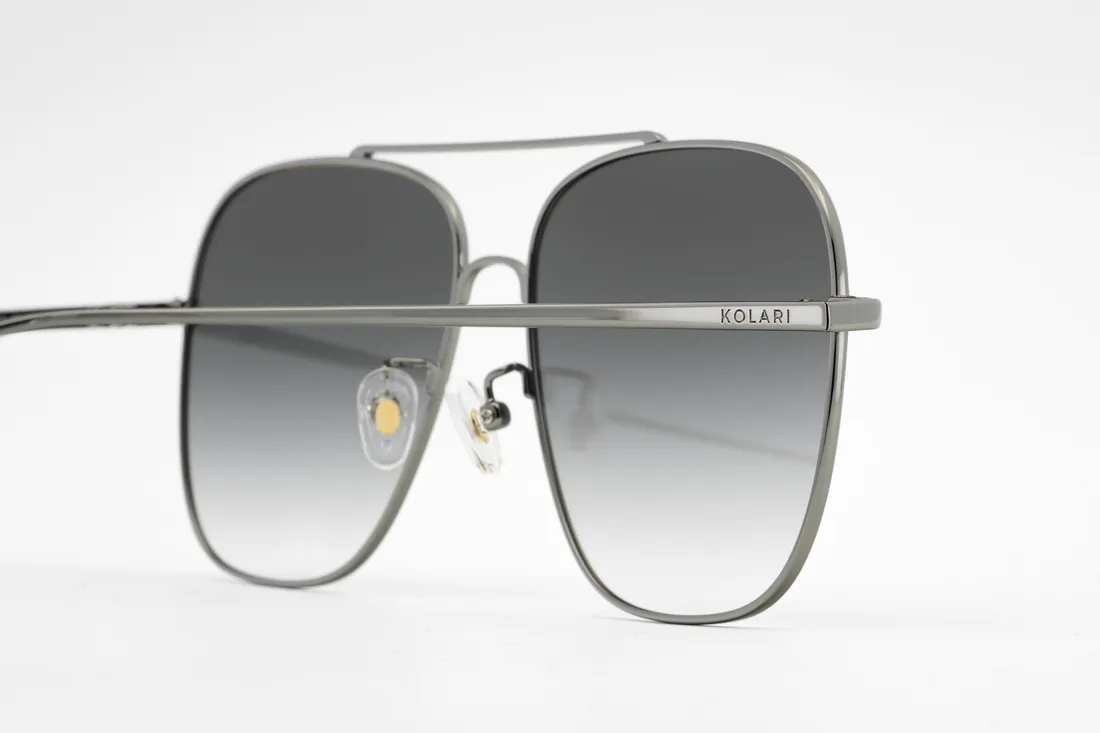
Aviator
Squared teardrop. The broadest fit across face shapes.
IR 99%UltraRecommended$339.99 IR 90%Standard$239.99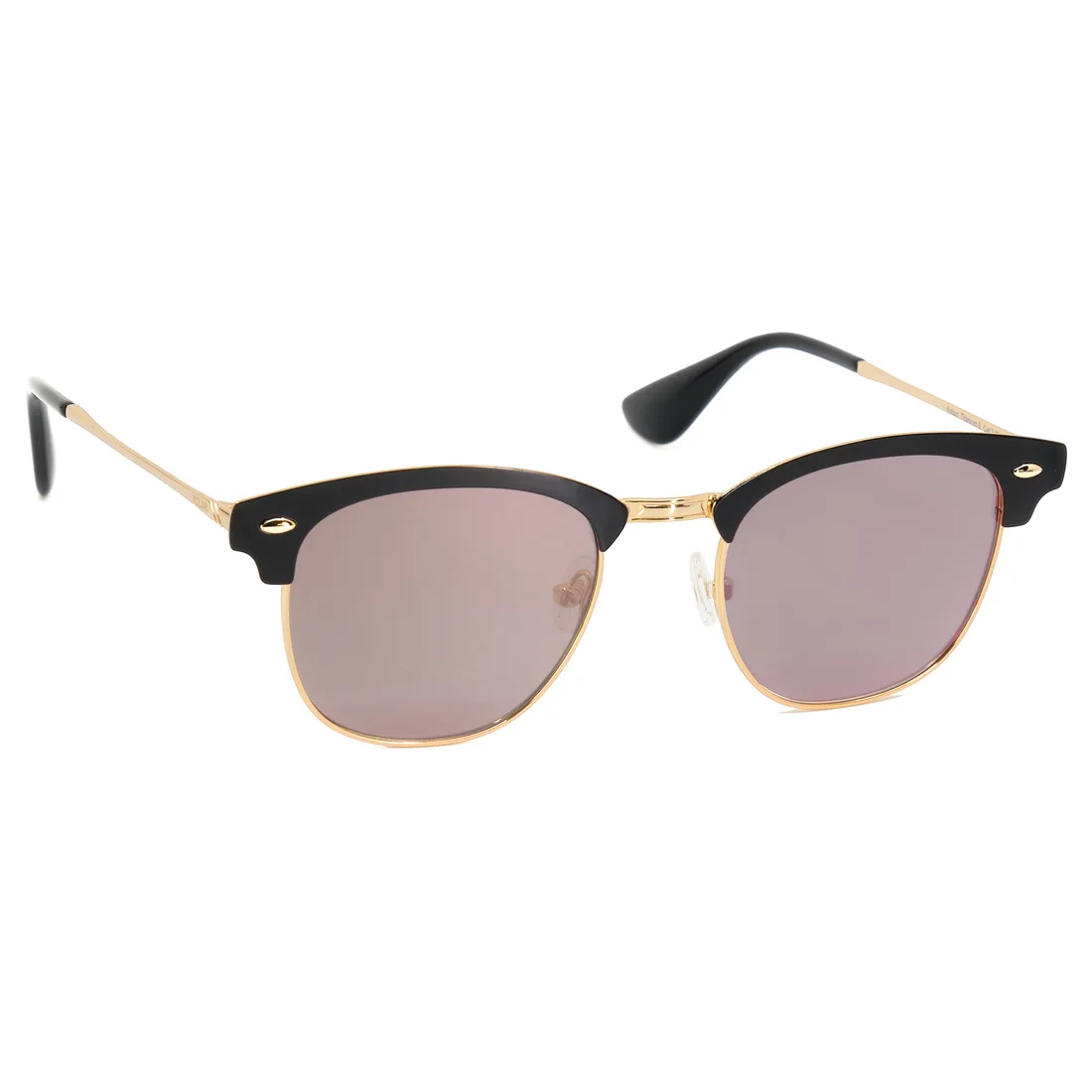
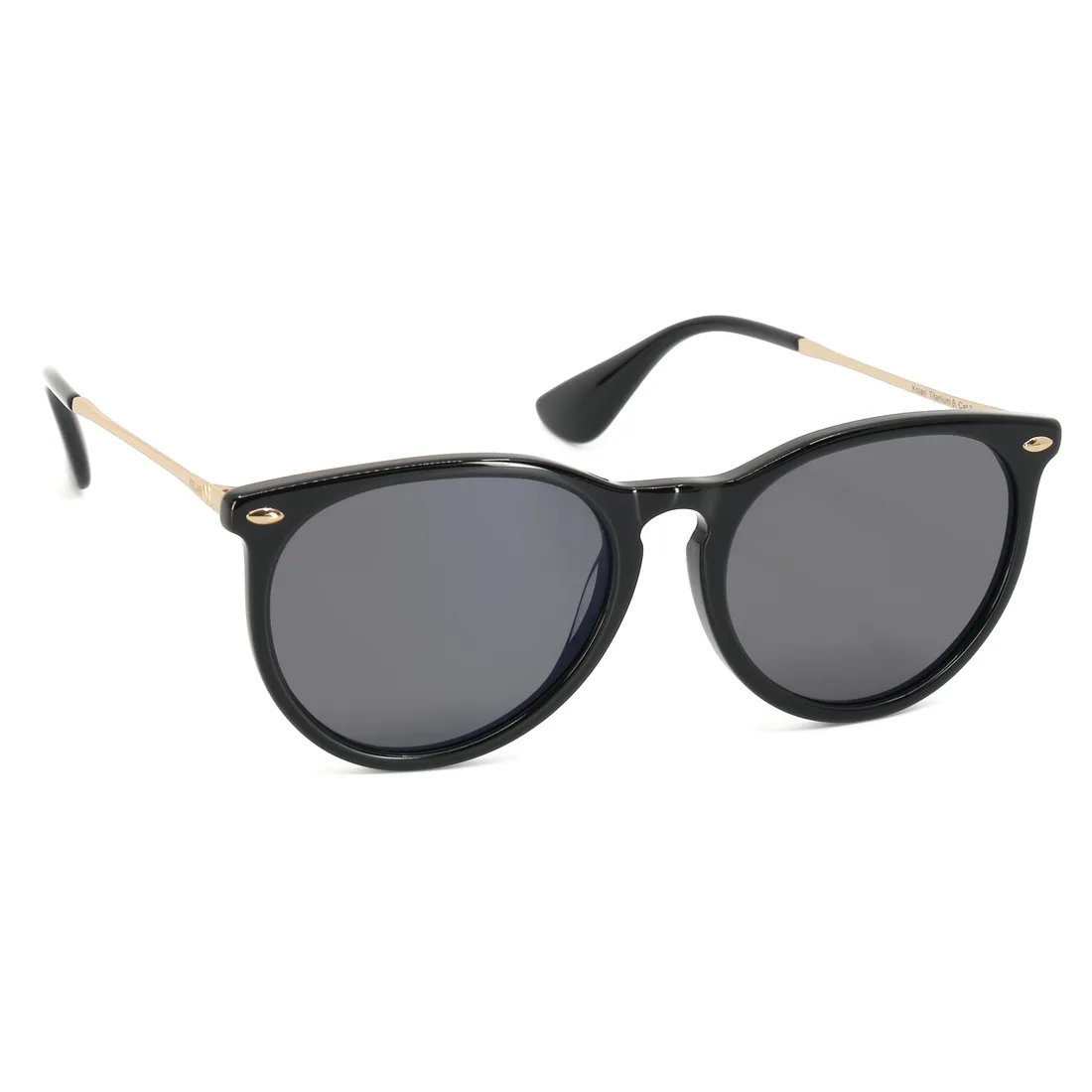
Horizon
Rounded, lighter section. The most casual profile.
IR 99%UltraRecommended$339.99 IR 90%Standard$239.99Aviator is available in silver or gold, with a gradient lens option at no cost on the standard specification. Classic and Horizon ship in a single finish.
Fig. 08 / Terms
If the specification does not hold up, return them.
Return window
Easy 60-day returns on every pair.
Shipping
Free on domestic orders over $100. No sales tax outside New Jersey.
Warranty
24-month limited manufacturer’s warranty on frames and lenses.
Fig. 09 / Questions
Specifics.
What exactly does 90% versus 99% IR change?
The proportion of infrared light reaching your eye. Standard lenses reject 90%, Ultra lenses reject 99%. Nothing else differs between the two: same glass, same coatings, same flatness, same colour neutrality.
Does blocking infrared change how things look?
No. Infrared is outside the visible range, so removing it does not alter colour or brightness. The lenses are colour neutral by design, which is the same requirement a camera filter has to meet.
Is glass safe to wear?
Corning Gorilla Glass is an impact-resistant alkali-aluminosilicate, the material family used for phone cover glass. Combined with a titanium frame that flexes rather than snapping.
Is there a warranty?
Yes. A 24-month limited manufacturer’s warranty covers defects in the frames and lenses. It does not cover normal wear and tear, scratches, accidental damage, drops, abuse, neglect, improper storage, or unauthorised repairs and modifications.
Can I get prescription lenses?
Not at the moment. Kolari Shades are currently made in non-prescription lenses only.
How heavy are they?
Heavier than polycarbonate, offset by titanium, which is roughly half the density of steel.
Optics you can check the numbers on.
From $239.99. Free shipping over $100. No sales tax outside New Jersey.
Configure your pair